

Sanzen-in Temple
Sanzen-in Monzeki, Ohara, Kyoto — a Tendai Buddhist temple whose history reaches back more than 1,200 years, set among moss gardens and ancient cedars in the hills north of the city.

History由緒
Sanzen-in Temple traces its origins to a hermitage founded by Saicho (767–822), the monk who established the Tendai school of Buddhism in Japan. Over the centuries its residence moved several times before settling in the Ohara valley, north of Kyoto, where it has stood since the Meiji era under its present name.
As one of the five Tendai monzeki temples — temples traditionally headed by a member of the imperial family — Sanzen-in holds a distinctive place in the history of Japanese Buddhism. The Ohara area itself has been known for over a thousand years as a training ground for Shomyo Buddhist chant, a tradition said to have shaped the development of Japanese vocal music.
The Grounds
Sanzen-in's grounds are known for their moss gardens, tall cedars and seasonal color, from fresh spring green and summer hydrangeas to autumn foliage and quiet winter snow. A few highlights:
-
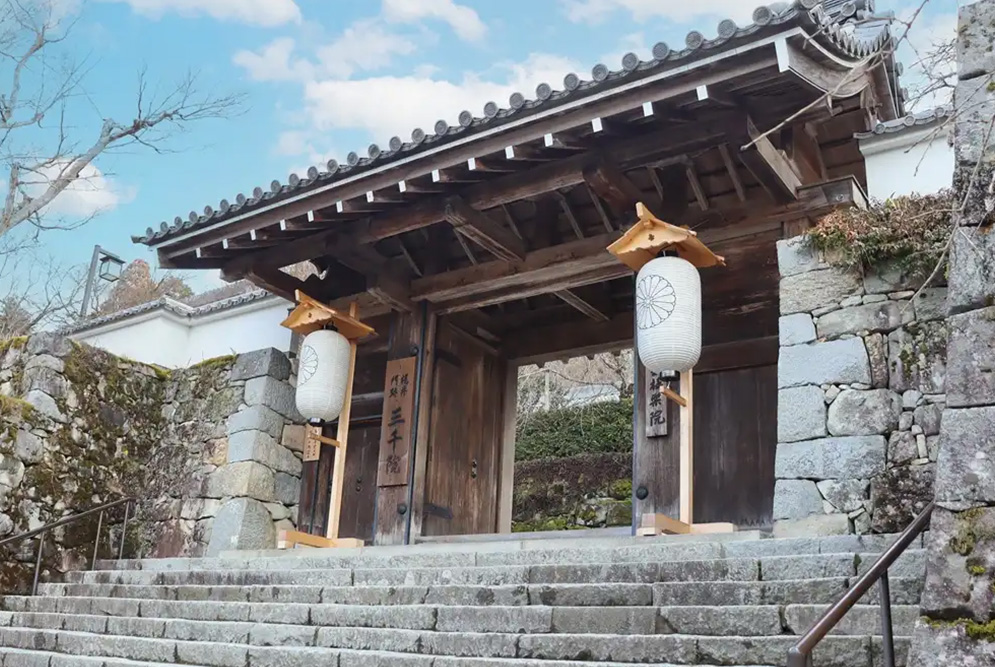
Gomon GateThe temple's main gate, marking the entrance to the precinct. -
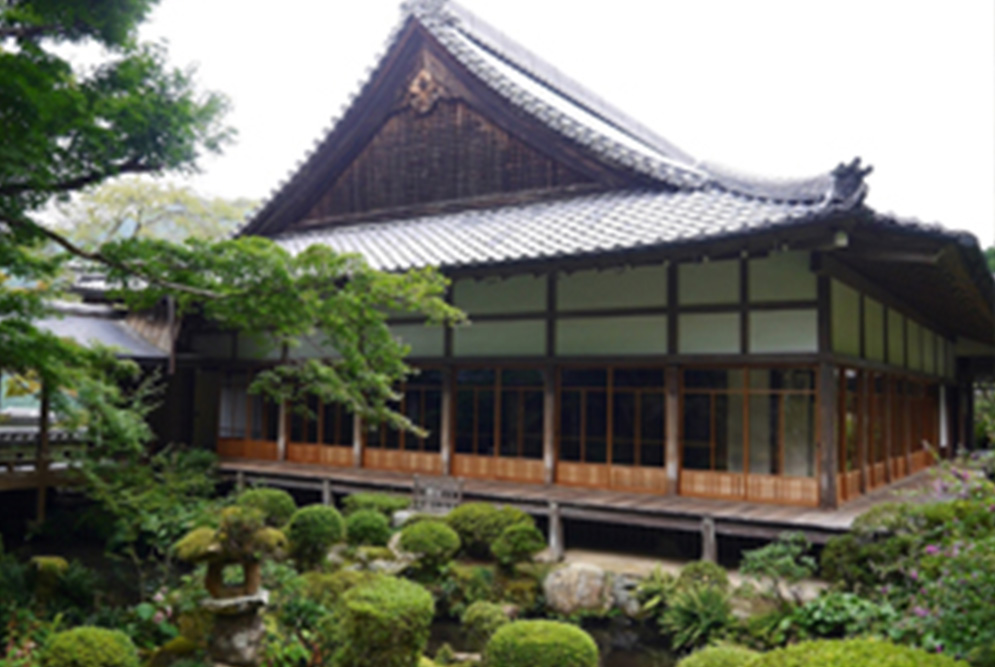
Kyakuden Hall & Shuheki-en GardenA shoin-style hall overlooking a classic Japanese garden. -
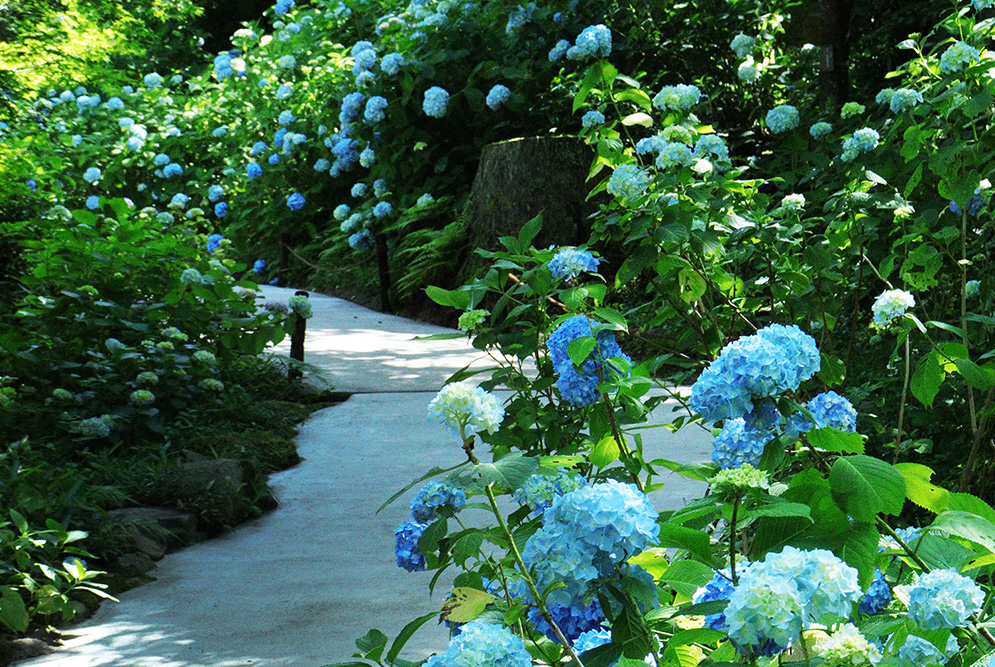
Ajisai-en GardenA path lined with hydrangeas, at its best from June into July. -
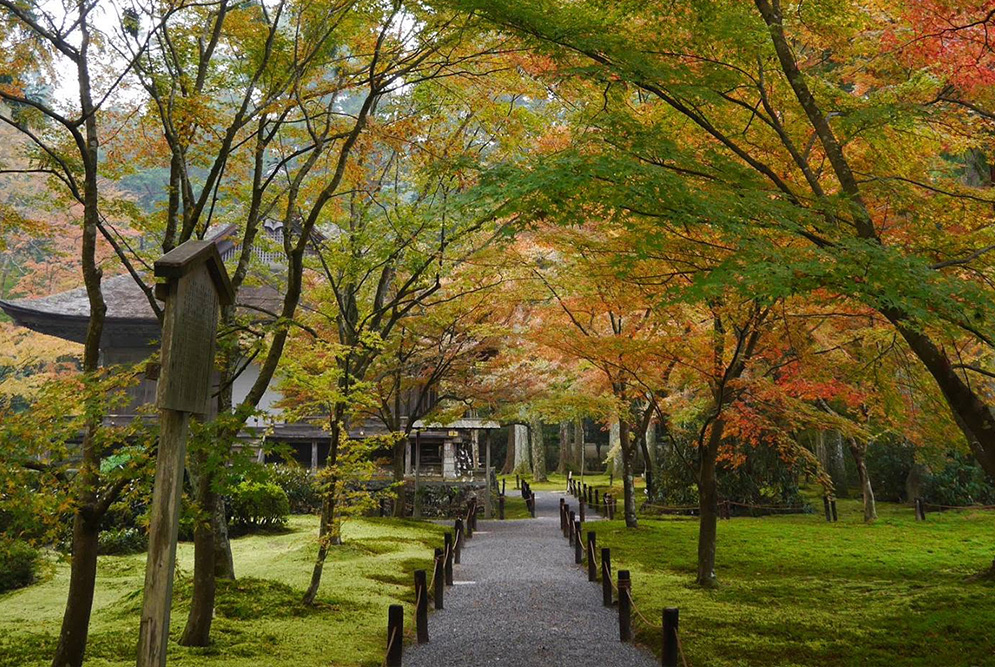
Approach to Ojoin HallA quiet path through cedars and maples, especially beautiful in autumn. -
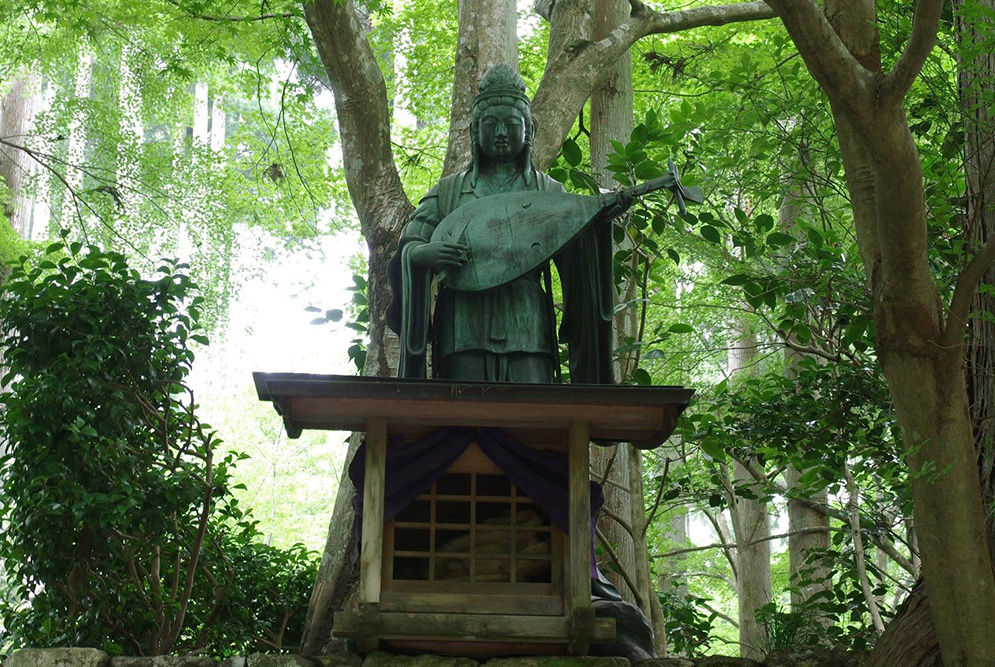
BenzaitenBenzaiten is enshrined beside the approach leading to Konjiki Fudo-do, just past Ojo Gokuraku-in. -
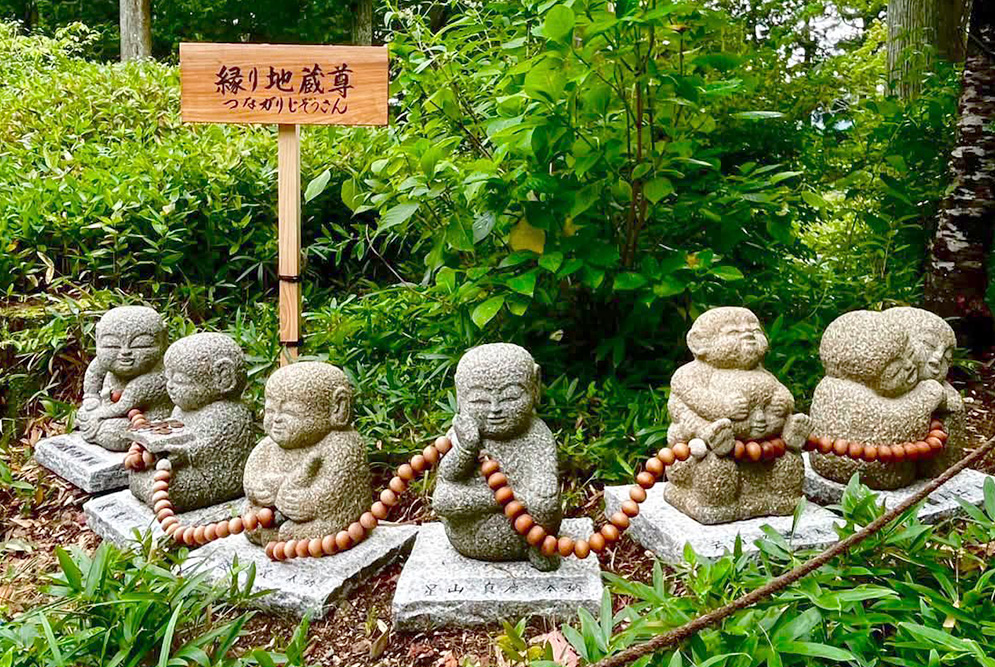
Tsunagari Jizo-sonA row of charming stone jizo statues, a favorite spot for photographs.
A detailed precinct map (in Japanese) is available on our main website.
Temple Stamps (Goshuin)
Five hand-written temple stamps are available at Sanzen-in, dedicated to Konjiki Fudo Myoo, Benzaiten, Kannon Bosatsu, Yakushi Nyorai, and the Amida Sanzon (Amitabha Trinity).
All five shuin, including those for Konjiki Fudo Myoo and Benzaiten, can be received at Konjiki Fudo-do.

Cultural Properties国宝と重文
Ojoin Hall enshrines a seated Amida Sanzon (Amitabha Trinity) — Amida flanked by the bodhisattvas Kannon and Seishi — dating from the late Heian period and designated a National Treasure. The hall's coffered ceiling, built in a distinctive boat-bottom (funazoko) shape, is itself a notable feature of the building.
Sanzen-in is also home to a number of Important Cultural Properties, including further Buddhist statuary and works of art connected with the temple's long history as a Tendai monzeki.
Visitor Etiquette

Sanzen-in is a place of worship. Please keep conversations and phone calls quiet within the grounds and enjoy a peaceful visit. We appreciate your consideration for other visitors.
Please Treat the Cultural Properties, Buildings and Gardens with CarePlease do not touch the Buddhist statues, buildings, moss or plants, and keep to the designated paths. Please do not enter restricted areas or step past any barriers.
Please Be Considerate of Others When Taking Photos or VideoWhen taking photographs, please be careful not to block the way or disturb other visitors. Please avoid occupying the same spot for a long time or blocking the paths. Photography is not permitted in areas where it is prohibited.
Please Take Your Trash Home with YouTo help keep the grounds beautiful, please do not leave trash behind. Eating, drinking and smoking are permitted only in designated areas, in accordance with the posted guidance.
Please Be Mindful of the Local CommunityThe Ohara area surrounding Sanzen-in is also home to local residents. Please avoid blocking roads, entering private property, or speaking loudly. We ask for your respect for the local way of life and culture, and hope you enjoy your visit.
Visitor Guide
| Address | 540 Raigoin-cho, Ohara, Sakyo-ku, Kyoto 601-1242, Japan Tel. 075-744-2531 (+81-75-744-2531 from overseas) |
|---|---|
| Visiting Hours |
Mar. – Oct.9:00 am – 5:00 pm
November8:30 am – 5:00 pm
Dec. – Feb.9:00 am – 4:30 pm
|
| Admission | Adults: ¥700 (¥600 for groups of 30 or more) Junior & senior high school students: ¥400 (¥300 for groups of 30 or more) Elementary school students: ¥150 |
| Closed Days | Open every day of the year |
Access

By Train & Bus
From Kyoto Station, take Kyoto City Bus Route 17 bound for Ohara (about 1 hour) and get off at the “Ohara” bus stop; the temple is a further 10-minute walk uphill.
Alternatively, take the subway Karasuma Line to Kokusaikaikan Station, then transfer to a Kyoto Bus bound for Ohara (about 23 minutes), and walk about 10 minutes from the “Ohara” bus stop.
By Car
Sanzen-in Temple does not have its own parking lot. Paid public and private parking lots are available in the Ohara area, a short walk from the temple.
Discover More
For the latest news, annual events, our photo gallery, and a guide to exploring the wider Ohara area, please visit our main Japanese-language website — many pages are rich with photos and maps that need no translation.